Manhattan delivery • $25 minimum • Free in ZIP codes 10010, 10009 & 10003 • Fees vary elsewhere
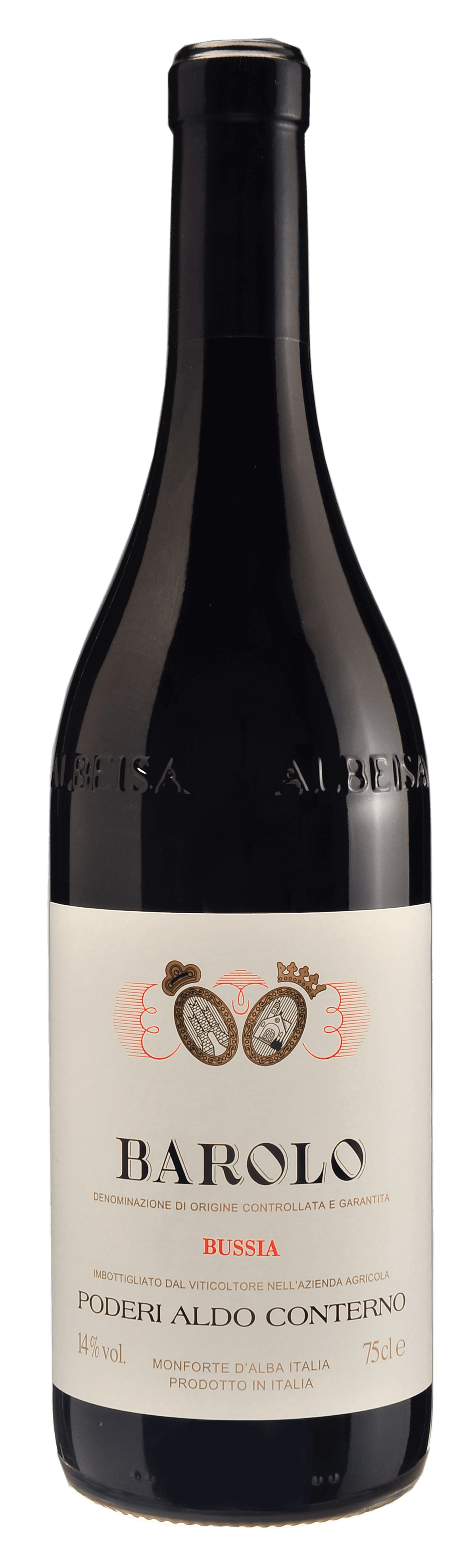
PODERI ALDO CONTERNO BUSSIA BAROLO 2021 750ML
Product price
Description
Poderi Aldo Conterno Barolo “Bussia” DOCG
Poderi Aldo Conterno Barolo Bussia is a classic, traditionally styled Barolo from Bussia in Monforte d’Alba, one of the most important vineyard areas in the Barolo appellation. It is a wine built around the natural combination of Nebbiolo’s perfume, acidity and tannic structure with the richness and depth associated with Monforte.
The estate is based at its Favot property in Bussia and farms about 25 hectares. Its vineyards sit around 350–400 meters, predominantly facing south to southwest, on clayey-calcareous marl with layers of sand. poderialdoconterno.com+1
The wine
The Bussia Barolo is made from Nebbiolo, specifically the Michet and Lampia varieties, sourced from several vineyards within Bussia. The vines used for this Barolo are at least 15–20 years old. Grapes are harvested manually, with careful selection in the vineyard. poderialdoconterno.com
Fermentation takes place in stainless-steel vats, with the wine remaining on its skins for approximately 20–30 days. Fermentation temperatures can reach around 32°C, allowing substantial extraction of color, tannin and flavor from the Nebbiolo skins. After fermentation, the wine is racked several times before being transferred into oak casks, where it develops and matures. poderialdoconterno.com
Appearance
Expect the classic Nebbiolo spectrum:
- Brilliant garnet
- Ruby core in its youth
- Orange or brick reflections with age
- Increasing transparency as the wine matures
Older bottles become progressively more brick-red and tawny, a characteristic evolution of traditionally made Nebbiolo.
Aromatics
The nose is one of the wine's greatest strengths. Depending on vintage and bottle age, look for:
- Red cherry
- Sour cherry
- Dried strawberry
- Rose petal
- Violet
- Licorice
- Orange peel
- Anise
- Tobacco
- Balsamic herbs
- Camphor and menthol
- Forest floor
- Earth and mineral notes
A mature bottle can develop beautiful tertiary aromas of leather, dried flowers, truffle, underbrush and tobacco.
The 2021, for example, has been described with dried cherry, rose petal, citrus peel, licorice, violet, camphor and balsamic nuances. voyageursduvin.com+1
Palate
The Bussia has the classic architecture expected from serious Barolo: bright acidity + firm tannin + concentrated red fruit + savory/mineral complexity.
Young, it can be quite structured and somewhat austere. The palate typically shows:
Cherry → raspberry/red berry → licorice → spice → herbs → mineral/tannic finish.
With bottle age, the fruit becomes less overtly primary and the wine gains the classic earthy, savory and tertiary complexity associated with mature Nebbiolo.
A notable characteristic is that the wine can have considerable power without necessarily feeling heavy. Wine Enthusiast's 2010 review, for example, highlighted Morello cherry, wild strawberry, spice and balsamic notes alongside firm but polished tannins. Wine Enthusiast
Tannins & acidity
This is not a soft, immediately fruity red.
The tannins are an important part of the wine's identity. In a young vintage they can feel:
- Firm
- Chalky
- Grippy
- Persistent
The wine's high natural acidity keeps the structure fresh rather than heavy. With age, tannins become increasingly integrated and silky, allowing the aromatic complexity to take center stage.
That combination of tannin and acidity is also what gives Bussia excellent cellaring potential.
Terroir
Bussia is particularly interesting because of its Monforte terroir. Poderi Aldo Conterno describes its Bussia vineyards as being characterized by clayey-calcareous soils with layers of sand and a south/southwest exposure. poderialdoconterno.com
The estate's historic Bussia crus—Romirasco, Cicala and Colonnello—are regarded as especially important expressions of the estate's terroir. The winery describes their soils as rich in calcium carbonate and iron, producing Nebbiolo with a particularly classical, spicy character. poderialdoconterno.com
The regular Bussia Barolo should therefore be thought of as a broader expression of the estate's Bussia vineyards rather than a single-vineyard cru such as Colonnello or Cicala.
Style
I'd describe the wine as:
Powerful but elegant • Structured • Aromatic • Dry • High-acid • Tannic • Savory • Long-lived • Traditionally Piedmontese
It has considerably more seriousness and structure than a simple fruit-forward Italian red. At the same time, good vintages can have remarkable perfume and finesse.
For comparison, the estate's individual Bussia crus can become even more profound. Its Romirasco, Cicala and Colonnello are separate cru wines, while Granbussia Riserva is the estate's most prestigious expression, combining fruit from those three historic crus and produced only in vintages the winery considers worthy. poderialdoconterno.com+1
Aging potential
This is a wine that rewards patience.
A young Bussia can be impressive but often feels tightly wound, with tannins dominating the finish. Given time, the tannins soften and the wine develops the tertiary characteristics that make mature Barolo so compelling.
Depending on vintage and storage, a good bottle can comfortably develop over 10–20+ years, with particularly strong vintages capable of going considerably longer.
For example, Wine Enthusiast rated the 2010 Bussia 95 points, noting its firm but polished tannins and recommending further development, while the 2011 received 94 points. Wine Enthusiast+1
The 2020 Bussia has also received strong contemporary reviews: Wine.com reports scores of 94 James Suckling, 93 Wine Spectator and 92 Vinous, with reviewers emphasizing cherry, strawberry, violet, licorice, earth, mineral character and substantial tannins. Wine
Food pairing
This is quintessentially a food wine.
Excellent pairings include:
- Brasato al Barolo
- Braised beef
- Osso buco
- Beef short ribs
- Veal
- Lamb
- Wild game
- Truffle tajarin
- Porcini mushrooms
- Risotto with mushrooms
- Aged Parmigiano-Reggiano
- Castelmagno
- Fontina
- Rich Piedmontese meat dishes
The classic combination would be Barolo with braised beef or tajarin with Alba white truffle. The protein softens the tannins while the wine's acidity cuts through the richness of the dish. voyageursduvin.com
Professional tasting note
Poderi Aldo Conterno Barolo Bussia DOCG is a structured and perfumed expression of Nebbiolo from Monforte d'Alba. The wine opens with aromas of ripe and dried red cherry, rose petal, violet and orange peel, gradually revealing licorice, anise, balsamic herbs, tobacco and earthy mineral tones. On the palate it is dry, concentrated and elegantly powerful, with vibrant acidity, finely persistent tannins and a core of red fruit. With bottle age, the fruit evolves toward dried cherry, leather, forest floor, truffle and tobacco, while the tannins become increasingly polished and integrated. Long, savory and persistent, it is a classic Barolo built for both the table and the cellar.
In one sentence: this is a serious, traditionally structured Barolo with beautiful Nebbiolo perfume, firm tannins, vibrant acidity and the capacity to become exceptionally complex with age.
Sources